Building competence in a world that sells dependence.
Learning experience designer and interactive developer. I take the operations a business actually runs on — billing, patient access, contact centers — and turn them into practice that leaves people able to do the work. Everything here was tested before it shipped.
Every tool here has an Edit button instead of a support request. The point is a facilitator who can change it without asking me.

Two pages, current, in the format every applicant tracking system expects. The rest of this page is the part a PDF cannot show.
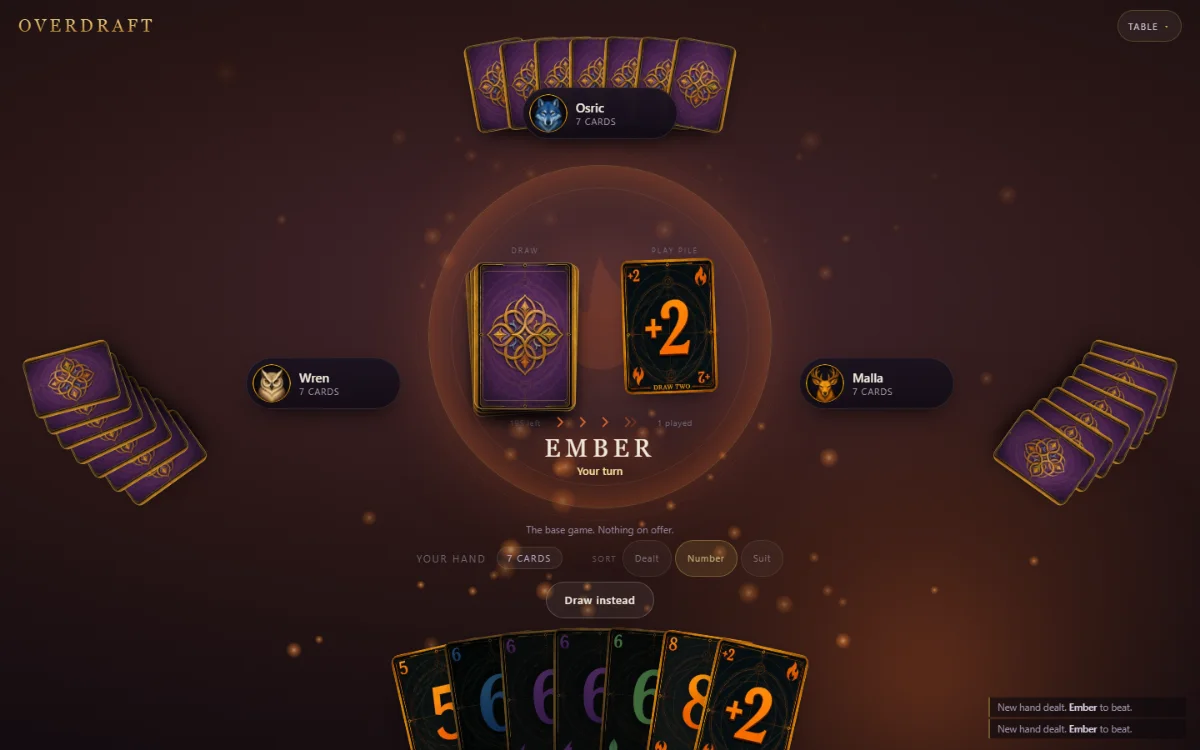 A four-seat test session, on the table screen
See them running →
Shipped
a product in production, architected and built alone.
Open Zareli →
A four-seat test session, on the table screen
See them running →
Shipped
a product in production, architected and built alone.
Open Zareli →
A product, not a portfolio piece
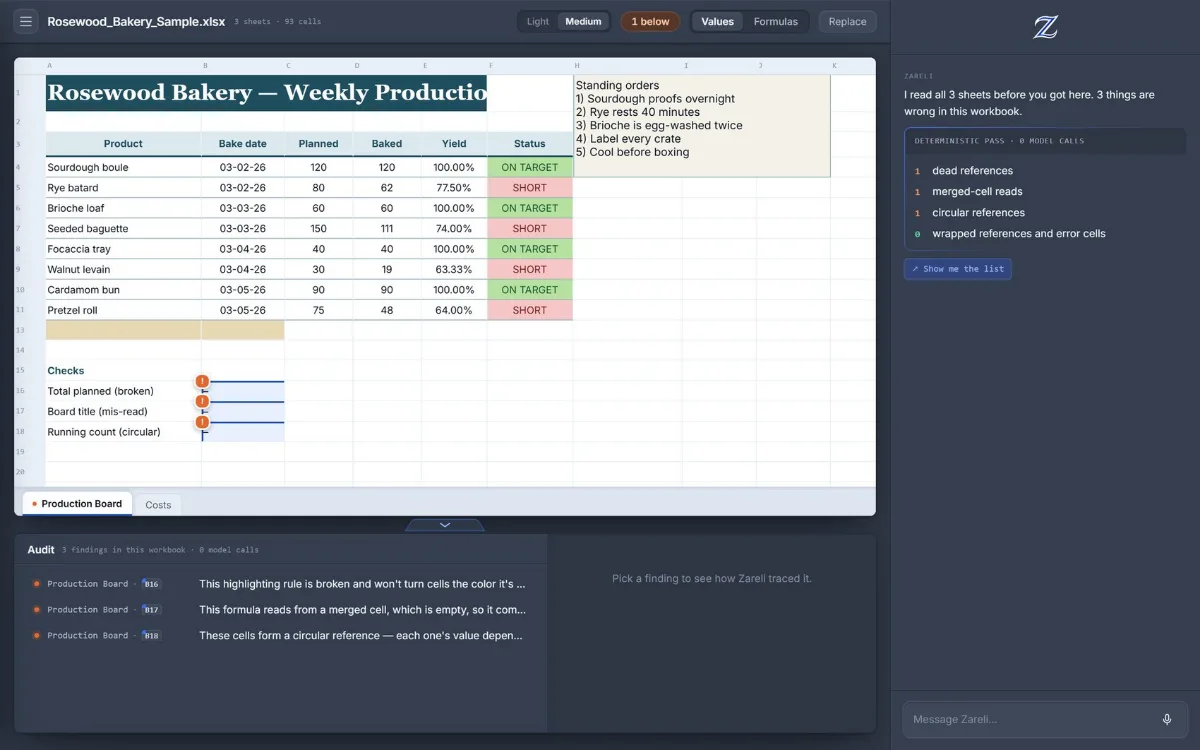
An AI-assisted auditor for the spreadsheets a business actually runs on — the ones nobody fully trusts and nobody wants to check by hand.
The audit is a parser and a graph walk, with no model call. A model that misreads a formula answers just as confidently as one that reads it correctly, so the finding is deterministic and the model only explains it.
Live · with early users
Working software in HTML, CSS and JavaScript, alongside Captivate and Articulate 360 — Storyline scenes and Rise blocks. If a facilitator cannot open it and run it cold, it is not finished.
AI speeds up drafting, prototyping, content cleanup and scenario generation. What a room actually needs gets worked out with the SMEs who do the job.
Unreliable wifi, locked-down laptops, people who have been sitting since nine. Those are the constraints, and the facilitator running it is who I design for.
Start here
Method
I have taken the parts of ADDIE that earn their place — analysis before anything is built, and evaluation that actually changes the next version — and work my own way through the rest. Adult learning is the reason for the shape of it: people arrive with a job to do and no patience for theory, so the work starts from what they are already failing at and ends with something they can practice on.
Time with the people who do the job, and the SMEs who know why it is done that way. Most of what matters is not in the process document.
Where new starters stall, where experienced people quietly work around the system. That is the curriculum.
A scenario, a game, a simulation — something with a wrong answer in it. Reading about a workflow is not the same as running one.
Track readiness and where people struggle, and revise. The first version is a draft with an audience.
Corporate training rooms have unreliable internet and locked-down laptops. A tool that needs an account, a license or a login is a tool you cannot use on the day it matters — and I have watched that happen enough times to design around it.
So the things I make are single files. They open by double-clicking, run from a memory stick, and keep working when whatever service they might have depended on is gone. That constraint shapes everything else: no sign-ins, no seat counts, and nothing that stops being yours.
The practical part
The long way around
I learned to teach before I learned to design. Up to a dozen martial arts classes a day, every age and every skill level — that is where the thing that still runs my work landed: people learn from what they practice.
Retail, mobile sales and call centers came after. In every one of those rooms I ended up being the person who trained everyone else, usually because I had gone looking for the part of the process nobody had fixed yet.
That is still the shape of it. Find what frustrates a team, understand it completely before touching it, then build something that leaves the next person better at it than I was.
At NYU Langone Health I design and run new-hire and upskilling programs across Hospital Billing, Patient Access, Accounts Receivable and Customer Service — healthcare revenue cycle operations. I administer the LMS those programs run on: course setup, enrollments, and completion and assessment reporting. And I build the machinery underneath it — the Excel, SharePoint and Power Automate trackers the training team runs on: scheduling, attendance, assessment scores, learner readiness, program outcomes. I've trained and coached more than 4,000 people.
I built my own AI assistant, Zareli, and took it to a live deployment. Its first specialist reads spreadsheets properly — it tells you what is structurally broken, why, and what to do about it. I work with AI coding tools on the implementation and stay accountable for the architecture, the product decisions and the verification.
The same habit runs through everything here: every tool is driven through a headless browser and checked against assertions before it ships. I don't publish what I haven't tested.
Most AI is designed to make you need it more. I wanted the opposite — something that hands the work back to you a little more capable than it found you.
That is the same job as standing in a classroom. The measure of a good session is Monday morning — someone sitting down and doing the thing on their own, without calling anyone. Everything here is built to get to that morning sooner.
I don't have a college degree. I'd rather say that plainly than let it sit in a gap on a resume. What I have instead is a body of work you can open right now, a product in production with real users, and seven years of getting people competent at things they found hard. I'm working toward DP-900 and PL-300 because I'd rather add the credential than argue about it.
Solve the real problem. Keep tools simple enough that another facilitator can pick them up and trust them. Design for what people can recall under pressure. And measure readiness, not attendance.
AI accelerates drafting, organizing, and prototyping. A human verifies accuracy against the source of truth before anything reaches a learner — and a human stays accountable for every claim the output makes.
02 / Next
Classroom games, live multiplayer built for a room of thirty, planning tools — most of it opening with no internet at all.
See the work →